


Discover Art, History, and a Day of Experiences in Downtown Dallas NC

Jul 30
5 min read
You might just stay a little longer.
A visit to downtown Dallas may begin with a single stop, like an exhibit at the Gaston County Museum of Art & History, but the more you explore, the more stories you uncover. Inside the museum, visitors discover the artists, innovations, and traditions that have shaped Gaston County. Outside its doors, historic buildings, locally owned businesses, outdoor spaces, and community landmarks continue telling the story.

Unlike many communities where history has been replaced over time, Dallas invites visitors to experience the past alongside the present — where historic buildings, local businesses, and new experiences continue to share the same streets.
It is the kind of place where a quick visit can easily turn into a full day of exploring.

The Gaston County Museum of Art & History
is the perfect place to begin your Dallas adventure.
Currently on display, “The Turnings: A Cycle of American Time,” features the work of artist Emily Andress. The contemporary exhibit explores the cycles of American history through four large-scale paintings that reflect moments of growth, reflection, uncertainty, and change.
Andress, a Gaston County artist and owner of Awaken Gallery in Mount Holly, shares her work in a gallery recognized as the Best of North Carolina Art Gallery by the Guide to North Carolina. Her work encourages visitors to look closer at the stories, experiences, and moments that shape communities.
Her connection to Gaston County extends beyond gallery walls. Visitors can also experience her artwork outdoors at Tuckaseege Park along the Catawba River, where art and nature come together in a unique setting, Spirit of the River.
The museum’s rotating exhibits provide another reason to return throughout the year.

Visitors can also experience “Woven with Purpose: Innovating Basketry for Generations to Come,” featuring the contemporary basketry work of artist Shakeeka Watts Brooks.
Brooks reimagines traditional pine needle basketry through sculptural works that connect craftsmanship, cultural heritage, and contemporary art. The exhibit demonstrates how traditions passed through generations continue to evolve.
Also at the museum, visitors can also explore “When Are We US?”, an exhibit commemorating the United States’ 250th anniversary. Through documents, images, and recordings, the exhibit shares North Carolina stories connected to immigration, integration, fundamental rights, emancipation, and voting.
The newest exhibit "The Many Unheard Voices" explores the African American communities of Gaston County through the lens of education, community and inspiration.

Beyond the galleries, the Daniel Stowe Carriage House behind the museum is home to North Carolina’s largest collection of horse-drawn vehicles, offering visitors another way to experience craftsmanship and history.
Together, these exhibits show how art and history continue to shape the way we understand ourselves and our communities.

History Is Not Just Inside the Museum
Part of what makes downtown Dallas unique is that the history continues after you leave the galleries. The Gaston County Museum of Art & History is housed in the historic Hoffman Hotel, allowing visitors to experience new exhibits inside a building that is itself part of the community’s story.
Step outside and you are standing in the heart of Dallas’ historic square, where City Hall remains a centerpiece of the community. Unlike many places where historic buildings have disappeared over time, Dallas has preserved many of the structures that help tell its story.
A walk through downtown reveals layers of history — from historic buildings and the Historic Dallas Jail, now transformed into an event space, to businesses that continue bringing people together in spaces connected to the community’s past.

Where the Past Meets the Present
The stories found in Dallas are not frozen in time. They continue through the people, businesses, and traditions that make the community special today. After exploring the museum, take time to enjoy downtown’s locally owned restaurants and shops. Grab lunch at Front Porch and Provisions or Dallas Taphouse and Tavern or enjoy a coffee from The Traveling Sip Cafe. Before heading home, stop at Lineberger’s Farm, where generations of family farming continue through locally grown produce, fresh vegetables, honey, jams, and other favorites to take home.

Follow the Stories Beyond the Museum
The more you explore the Gaston County Museum of Art & History, the more you discover how these stories continue throughout Gaston County — in the places, people, and experiences that shaped our communities.

GASTONIA
The stories of Gaston County’s African American communities continue in Gastonia at the African American Museum of History and Culture and the Alfred C. Kisler Center located inside the refurbished Loray Mill. Once a working textile mill, the historic building has been transformed into a mixed-use destination with apartments, a coffee shop, and event spaces — offering another example of how Gaston County’s industrial past continues to shape experiences today.

McADENVILLE
Inside the museum, learn how important the textile industry was to this area, including the story of the Dynamo — Thomas Edison’s 31st hydroelectric generator, used to help power the local textile mills. Continue the story in McAdenville, where visitors can see remnants of the historic mill and experience the lasting impact of the textile industry that helped shape the town.

MOUNT HOLLY
From there, follow the thread to Mount Holly, where Gaston County’s textile heritage has been reimagined for a new generation. Muddy River Distillery operates inside a refurbished textile mill, transforming a piece of the county’s manufacturing past into a modern gathering place.
BELMONT
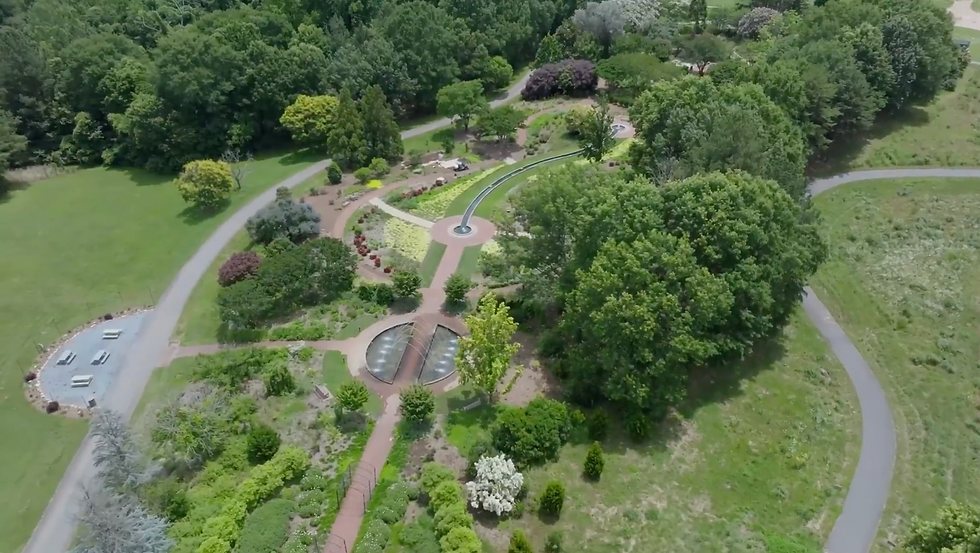
The Daniel Stowe Carriage House at the museum preserves North Carolina’s largest collection of horse-drawn vehicles and shares the story of Daniel J. Stowe, whose passion for preservation extended beyond historic collections. Continue the story at Daniel Stowe Conservancy in Belmont, where Stowe preserved nearly 400 acres of land and created a destination where visitors can experience gardens, nature, and the outdoors.
These are just a few of the ways the stories inside the museum continue beyond its walls. Make a visit today and discover how many stories you can uncover throughout Gaston County.
Dallas NC. Come for One Experience. Stay for the Story.
A visit to Dallas begins with a reason to arrive — an exhibit, a historic building, a meal, or a local experience. But the longer you explore, the more you discover. Art reveals the stories we carry forward. History shows how communities were built. Experiences throughout Gaston County bring those stories to life. Start with the museum. Explore the square. Follow the stories that continue throughout Gaston County. You might just stay a little longer.

The Gaston County Museum of Art & History 131 West Main St. Dallas, NC
704-922-7681 OPEN: Tuesday - Friday 10 am to 5 pm
Saturday 11 am to 4 pm
Admission is free.


