


Loray Mill: A Window Into Gaston County’s Textile History

2 days ago
3 min read
Step inside one of Gaston County’s most recognizable landmarks and discover the people, industry, and history woven into its walls.

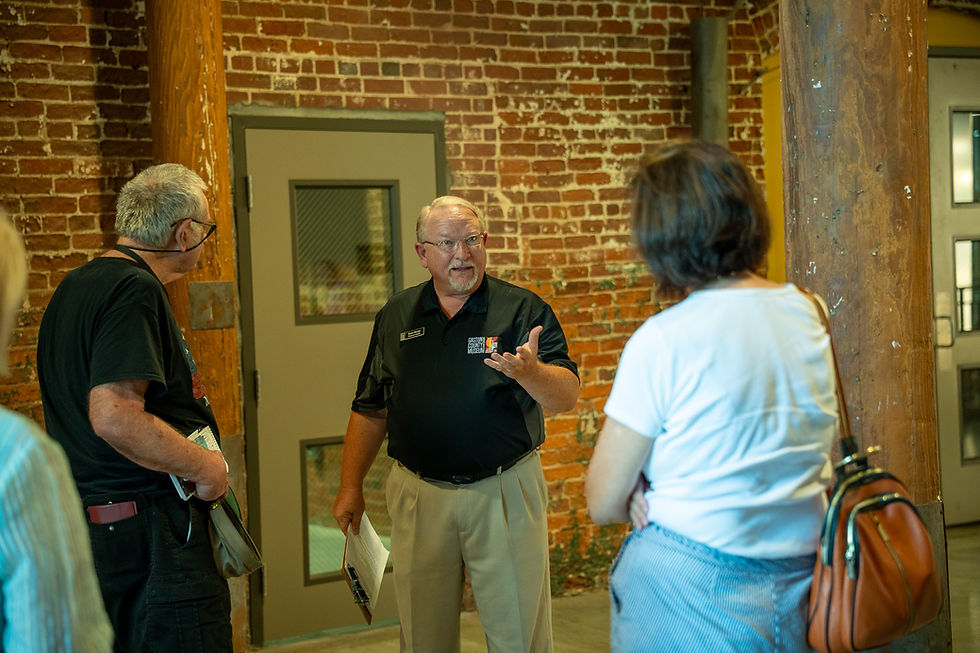
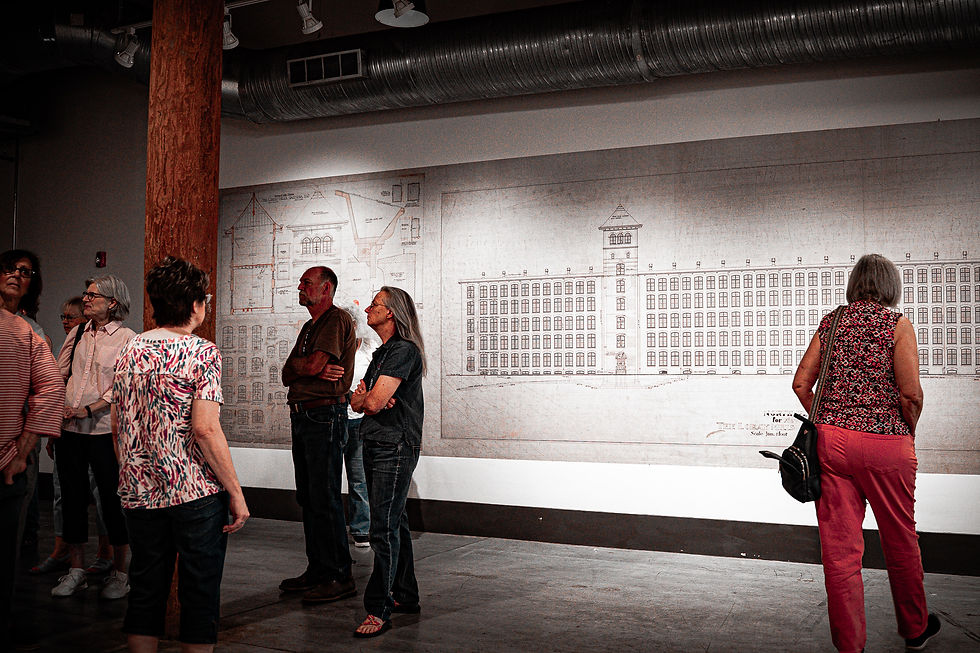
Walking through Loray Mill during a recent History Walk presented by the Gaston County Museum, I was reminded that historic buildings are more than brick, windows, and machinery. They are places where the stories of a community come together.
According to museum guide and textile historian Ken Hester, Loray Mill holds enough history, and enough personal family stories to keep visitors inside for a very long time.
And Loray’s story offers a window into something much bigger: Gaston County’s transformation into a textile powerhouse.
Before Loray, There Was the River
Long before Loray Mill opened, Gaston County’s rivers and streams were helping shape its future.
The county was formed in 1846, and early industries included farming, mining, grist mills, and sawmills. As industry developed, the Catawba River, South Fork, and surrounding waterways provided an important source of power for early mills.
By the late 1800s, textile manufacturing was becoming increasingly important. Among the people helping shape that industry was Charles Alexander Gray, a self-taught textile expert who was involved with several early mills.
Gray eventually partnered with John Franklin Love. Together, they envisioned something much larger.
Building a Textile Giant
Construction on Loray Mill began in 1900, and the mill officially began operating in 1902.
The name Loray came from combining the names Love and Gray. There was no person named Loray, the name itself reflects the partnership that created the mill.
The scale was remarkable. Loray was designed to be far larger than the typical textile mills of the time and eventually grew to roughly 600,000 square feet.
But building a massive mill didn't guarantee an easy beginning. Financial difficulties eventually pushed the founders out, and the mill went into receivership before new management took over.
More Than a Mill
As Loray grew, so did the community around it.
The mill became more than a place where people worked. A mill village developed around it, with homes, churches, and schools supporting the families who depended on the industry.
At its height, Loray employed thousands of workers, far more than the 200 to 300 employees typical of many textile mills.
That size also meant that what happened at Loray could have an enormous impact on the surrounding community.
A Difficult Chapter in Gaston County History
One of the most significant chapters came in 1929, when Loray workers went on strike.
Following changes in working conditions, including increased production expectations and reduced pay, approximately 1,800 of the mill's 2,200 workers walked out on April 1, 1929.
The strike lasted for months and became part of a larger story about labor, working conditions, and the lives of textile workers in Gaston County.
It is an important reminder that the county's textile heritage isn't simply a story of booming industry. It is also a story about the people whose work built that industry, and the challenges they faced along the way.
Look Closely at Loray
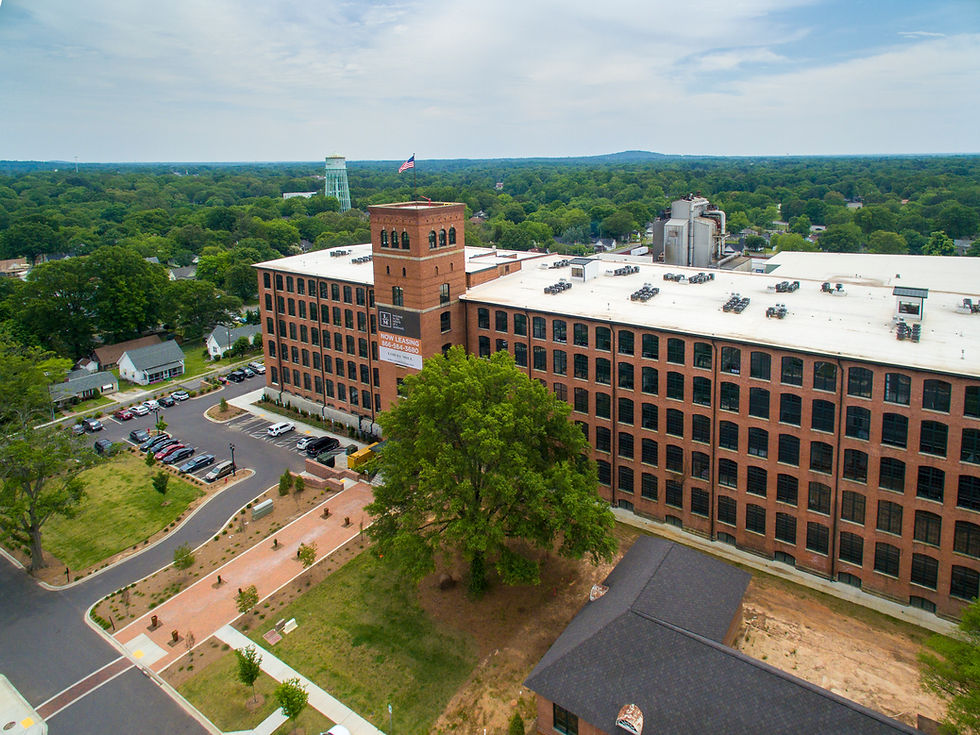
Even the building itself tells part of the story.
The enormous windows were designed to bring in as much natural light as possible at a time when electricity wasn't widely available or affordable. The original building covered approximately 475,000 square feet before later expansions brought it to roughly 600,000 square feet.
Today, Loray Mill has entered another chapter.
Rather than disappearing with the decline of textile manufacturing, the historic structure has been adapted for new uses, including apartments, businesses, and event spaces.
A Window Into Gaston County
That's what makes Loray Mill so fascinating.
Its story isn't isolated from the rest of Gaston County. It connects to the rivers that powered early industry, the communities that grew around textile mills, the workers who shaped the county's identity, and the historic buildings that remain today.

Gaston County once had roughly 110 textile mills. Only about 55 to 56 of those mill buildings remain, according to Hester.
Loray Mill gives visitors a chance to look through that history, not simply as something that happened long ago, but as part of the story that continues to shape Gaston County today.
And perhaps that's the most interesting thing about exploring a historic place: you don't just learn what happened there. You begin to understand the place you're standing in.

Experience Loray Mill's History
The Gaston County Museum offers opportunities to explore Loray Mill and its history through the Alfred C. Kessell History Center and historical walking tours. The center is located inside Loray Mill at 300 S. Firestone St. in Gastonia. With free admission, it’s an easy way to add a little local history to a day exploring Gaston County.
Come for the architecture. Stay for the stories.


